
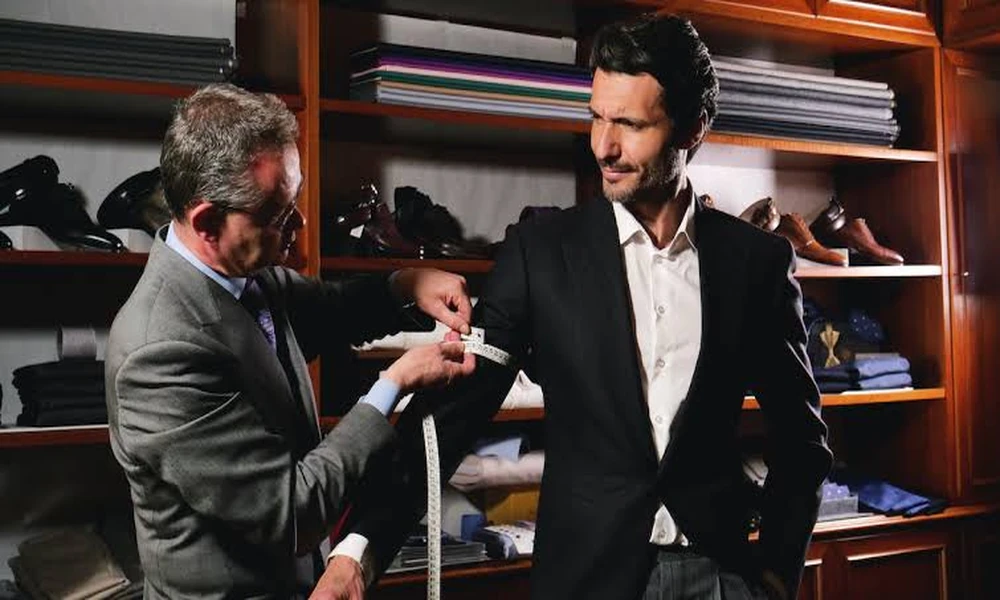
Sleeves that are always a little short. A jacket that fits the chest but gaps at the collar. Shoulders that never quite sit flat no matter how many sizes get tried on. For a lot of people, off-the-rack shopping isn’t really shopping. It’s a search for the least-wrong option in a size run built around an average that doesn’t describe them.
Working through this problem with a bangkok suit tailor starts from a different premise entirely, one where the body being fitted is the starting point rather than an exception to a standard pattern.
Why Off-the-Rack Fails These Builds First
Retail sizing is built around a handful of proportional assumptions, standard shoulder slope, even arm length relative to torso, symmetrical build side to side. Anyone who deviates from those assumptions, even slightly, ends up choosing between multiple compromises rather than one good fit. A taller torso with shorter arms. A broader back with a narrower chest. One shoulder sitting a touch lower than the other, which is more common than most people realize.
None of these are flaws. They’re just measurements that a standardized size run was never designed to capture.
What a Tailor Does Differently
A skilled tailor treats a build like this as information, not a problem to apologize for or work around quietly. Uneven shoulders get addressed with slightly different padding on each side. A longer torso gets a jacket length adjusted specifically for it rather than approximated. The goal isn’t hiding the build. It’s building a pattern that already accounts for it from the first cut.
This is really where the value of custom work shows up most clearly. A bangkok suit tailor working from individual measurements can correct for asymmetry in a way no amount of alterations on a retail jacket can fully manage, since altering a jacket after the fact only adjusts what’s already there rather than starting from the right shape.
How to Communicate Build Concerns Clearly
Vague descriptions like “hard to fit” or “I always have trouble with sleeves” don’t give a tailor much to work with. Specific observations do.
- Note exactly where retail clothing fails, short sleeves, gaping collar, pulling across the back
- Mention if one side of the body is noticeably different from the other
- Bring a jacket that fits reasonably well, even if imperfectly, as a reference point
- Ask directly whether the fitting will specifically check for asymmetry
- Speak up during the fitting itself, not just at the initial measurement stage
The Fitting Stage Is Where This Gets Confirmed
A first measurement can account for known differences on paper, but the fitting is where those adjustments actually get verified. Reaching, sitting, turning in the half-finished garment reveals whether the correction actually worked or needs another pass. Skipping that stage removes the one part of the process built specifically to catch this.
An unusual build isn’t a harder version of a normal fitting. It’s simply a fitting that needs someone paying closer attention, which is exactly what the process is designed to allow for.